
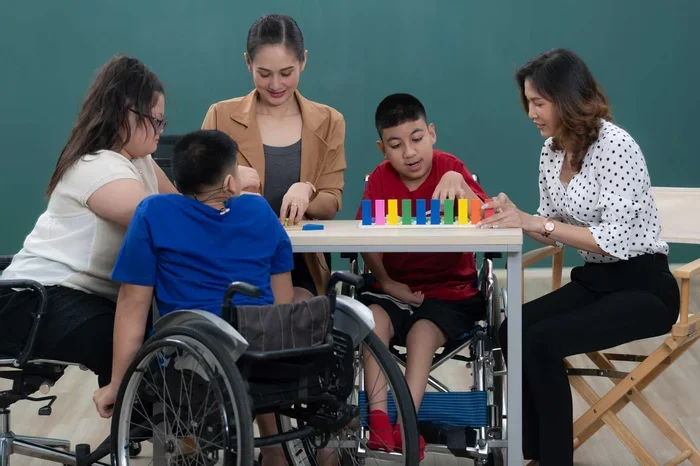
MTSS in special education is a framework that provides layered support to meet every student’s academic, behavioral, and social needs. It uses three tiers of intervention, from universal classroom strategies to intensive individualized help. This system helps educators identify struggles early and respond with targeted, data-driven support.
Every student learns differently. Some grasp new concepts quickly, while others need extra time and support. MTSS in special education is a framework designed to make sure no student falls through the cracks. It gives schools a clear, organized way to help every learner succeed.
If you are a parent, teacher, or school leader, understanding MTSS in special education can change how you think about student support. This framework is not just for kids who struggle. It benefits all learners by creating a system where help is available at every level. Let us walk through what MTSS really means, how it works, and why it has become such a powerful tool in schools today.
Key Takeaways
- MTSS stands for Multi-Tiered System of Supports: a structured framework that helps schools address academic and behavioral needs for all students.
- Three tiers form the backbone: Tier 1 covers universal support, Tier 2 targets at-risk students, and Tier 3 provides intensive individualized intervention.
- Early identification is key: universal screening and progress monitoring help catch learning gaps before they grow into bigger problems.
- MTSS benefits everyone: it supports general education students and those in special education equally through a unified approach.
- Data drives every decision: teachers use student performance data to choose the right interventions at each tier.
- Implementation takes teamwork: administrators, teachers, families, and specialists must collaborate for MTSS to work effectively.
📑 Table of Contents
What Is MTSS in Special Education?
MTSS stands for Multi-Tiered System of Supports. It is a proactive framework that schools use to provide targeted help to students who need it. Instead of waiting for a student to fail, MTSS catches problems early and responds with the right level of support.
The framework blends academic and behavioral support into one unified system. It works for all students, not just those in special education. Think of it like a safety net. The net has different layers, and each layer catches students at different points of need.
Teachers use MTSS in special education to plan instruction that meets diverse needs. The system relies on data, collaboration, and regular progress checks. It is not a program you buy. It is a way of thinking about how schools serve every student.
Why Was MTSS Created?
Before MTSS, schools often used a wait-to-fail approach. A student would struggle for months before anyone stepped in. By that time, the gap had already grown wide. MTSS in special education was built to fix this problem.
The framework came from two earlier models. One was Response to Intervention (RTI), which focused on academic support. The other was Positive Behavioral Interventions and Supports (PBIS), which addressed behavior. MTSS combined both into one system. This gave schools a complete picture of each student’s needs.
When educators use figurative language to explain these ideas to parents, it helps build understanding. Resources like idioms for education and similes for education can make complex topics feel more approachable and relatable for families.
How the Three Tiers of MTSS Work
The heart of MTSS in special education is its three-tier structure. Each tier represents a different level of support. Think of it like a pyramid. The base is wide because it serves everyone. The top is narrow because it serves only a few students who need the most help.
Tier 1: Universal Support for All Students
Tier 1 is the foundation. It covers instruction and support for every student in the school. General education teachers deliver high-quality, evidence-based lessons to the entire class. This tier is about prevention.
At this level, teachers use differentiated instruction to meet varied learning needs. They set clear expectations and create a positive classroom environment. Most students, about 80 to 90 percent, do well with Tier 1 support alone.
Key elements of Tier 1 include:
- Standards-based core instruction
- Clear behavioral expectations taught to all students
- Regular universal screening to check progress
- A positive classroom culture that supports learning
Teachers also use strategies that connect with students on a personal level. Using metaphors for education can help make abstract concepts feel more concrete and memorable for young learners.
Tier 2: Targeted Intervention for At-Risk Students
Tier 2 is for students who need more support than Tier 1 provides but do not yet need one-on-one help. About 5 to 15 percent of students fall into this group. These students may be at risk for academic or behavioral difficulties.
Interventions at Tier 2 are more focused. They are usually delivered in small groups. Students meet regularly for extra practice in areas where they struggle. Progress monitoring happens more often at this level.
Examples of Tier 2 strategies include:
- Small group reading intervention sessions
- Check-in/check-out behavioral systems
- Social skills groups
- Extra practice time with a trained interventionist
The goal is to close the gap before it becomes a bigger problem. Teachers track data closely to see if the intervention is working. If a student does not respond, they may move to Tier 3.
Tier 3: Intensive Individualized Support
Tier 3 serves the smallest group of students, usually 1 to 5 percent. These learners need intensive intervention. They may have significant academic delays or persistent behavioral challenges.
At this level, support is highly individualized. Teachers or specialists work one-on-one or in very small groups. The interventions are tailored to the student’s specific needs. MTSS in special education often plays a big role at Tier 3 because these students may already have an Individualized Education Program (IEP).
Key features of Tier 3 include:
- Frequent progress monitoring, sometimes weekly
- Customized intervention plans based on detailed data
- Collaboration between teachers, specialists, and families
- Adjustments to the learning environment or curriculum
When educators explain these tiers to families, using clear and supportive language makes a big difference. Resources like idioms for someone special can help teachers communicate care and respect to families during these sensitive conversations.
Why MTSS Matters for Students and Teachers
MTSS in special education matters because it changes how schools think about support. Instead of reacting to problems after they grow, schools can intervene early. This saves time, reduces frustration, and helps students stay on track.
For students, MTSS creates a sense of safety. They know that help is available and that their teacher notices when they are struggling. For teachers, the framework provides a clear roadmap. They do not have to guess what to do next. The data tells them.
Benefits for Students
Students benefit from MTSS in many ways:
- Early identification: struggles are caught before they become major barriers.
- Personalized help: interventions match each student’s specific needs.
- Improved outcomes: research shows that tiered support leads to better academic and behavioral results.
- Greater equity: every student gets access to support, regardless of background.
- Stronger self-confidence: students who receive timely help feel more capable and engaged.
Benefits for Teachers
Teachers also gain from a well-implemented MTSS system:
- Clearer instructional direction based on real data
- Better collaboration with colleagues and specialists
- More time to focus on teaching instead of managing crises
- A structured way to document and track student growth
- Professional growth through data-driven decision-making
When teachers use MTSS in special education effectively, the whole classroom improves. Students who might have been overlooked now get the attention they deserve. The classroom becomes a place where everyone can grow.
How Schools Implement MTSS Successfully
Implementing MTSS in special education is not a one-person job. It takes planning, commitment, and teamwork. Schools that do it well follow a few key steps.
Step 1: Build a Leadership Team
Start with a dedicated team that includes administrators, general and special education teachers, and support staff. This team leads the implementation process. They set goals, assign roles, and monitor progress.
Step 2: Train Staff Thoroughly
Teachers need training on every part of MTSS. They must understand how to use data, deliver interventions, and collaborate with colleagues. Professional development should be ongoing, not a one-time event.
Step 3: Use Reliable Data Systems
Schools need tools to collect and analyze student data. Screening tools help identify at-risk students. Progress monitoring tools track growth over time. Without good data, MTSS cannot work effectively.
Step 4: Engage Families
Families are essential partners in MTSS. Schools should communicate clearly and regularly with parents. When families understand the system, they can support learning at home. Using simple, warm language helps build trust and openness.
Step 5: Review and Adjust
MTSS is not set and forget. Schools must review their data regularly and adjust their approach. What works for one group of students may not work for another. Flexibility is a core strength of the framework.
Common Challenges Schools Face with MTSS
No framework is perfect. Schools often run into challenges when implementing MTSS in special education. Knowing these challenges ahead of time can help you prepare.
Challenge 1: Lack of Time and Resources
Teachers already have full plates. Adding another system can feel overwhelming. Schools must provide enough time for planning, data meetings, and intervention delivery. Without adequate resources, MTSS becomes another burden.
Challenge 2: Inconsistent Data Use
Data is the engine of MTSS. But if teams do not use it consistently, the system breaks down. Some teachers may collect data but never review it. Others may not know how to interpret the results.
Challenge 3: Silos Between General and Special Education
MTSS is meant to unite general and special education. In practice, these teams sometimes work separately. Breaking down those silos takes intentional effort and shared ownership.
Challenge 4: Resistance to Change
Change is hard. Some staff members may be skeptical of a new framework. They may prefer the old way of doing things. Leadership must communicate the “why” clearly and provide support throughout the transition.
MTSS vs. Other Support Frameworks
It helps to understand how MTSS in special education compares to other approaches. Here is a quick look at how MTSS stacks up against RTI and PBIS.
| Feature | MTSS | RTI | PBIS |
|---|---|---|---|
| Focus | Academic and behavioral | Academic only | Behavioral only |
| Tiers | Three tiers for all students | Three tiers for academic support | Three tiers for behavior |
| Data Use | Central to every decision | Used for academic placement | Used for behavior tracking |
| Scope | Whole school, all students | Primarily for struggling learners | Whole school, all students |
| Integration | Combines academics and behavior | Standalone academic model | Standalone behavior model |
The table above shows why MTSS has become the preferred framework. It brings everything together. Instead of juggling separate systems, schools can use one unified approach. This makes things simpler and more effective for everyone involved.
Just as figurative language helps us explain complex ideas in simple terms, MTSS helps schools explain student needs in a structured way. Tools like similes for someone special can help educators frame conversations with empathy and clarity when discussing individual student progress with families.
Key Takeaways for Getting Started with MTSS
If you are new to MTSS in special education, here are a few things to keep in mind:
- Start small. You do not have to implement everything at once.
- Focus on building strong Tier 1 instruction first. Everything else depends on it.
- Use data to guide every decision. Trust the numbers.
- Collaborate across teams. MTSS works best when everyone is on the same page.
- Communicate with families often. Transparency builds trust and support.
- Be patient. Change takes time, and progress is not always linear.
The journey to a fully functioning MTSS system takes time. But the results are worth it. Students get the help they need. Teachers feel more supported. And schools become places where every learner can thrive.
Conclusion
MTSS in special education is more than a framework. It is a commitment to every student in a school. It says that no child should be left behind and that help is always available. Whether a student needs universal support or intensive intervention, MTSS provides a clear path forward.
The three-tier system gives schools structure and flexibility. Data drives decisions. Collaboration is at the center. And families are valued partners in the process. When schools implement MTSS well, everyone benefits.
If you are a teacher, start by strengthening your Tier 1 instruction. If you are a parent, ask your school how they support struggling learners. And if you are an administrator, invest in training and data systems that make MTSS work. MTSS in special education has the power to transform lives. It is up to all of us to make it happen.
Frequently Asked Questions
What does MTSS stand for in special education?
MTSS stands for Multi-Tiered System of Supports. It is a framework schools use to provide academic, behavioral, and social support to all students through three levels of intervention intensity.
How is MTSS different from RTI?
RTI focuses only on academic support, while MTSS combines both academic and behavioral support into one unified system. MTSS also serves all students, not just those who are struggling.
Can MTSS be used for students who are not in special education?
Yes. MTSS is designed for every student. The universal tier supports all learners, and the targeted and intensive tiers help students at different levels of need across the entire school.
How often should progress monitoring happen in MTSS?
Progress monitoring frequency depends on the tier. Tier 1 uses universal screening three times a year. Tier 2 may involve monitoring every two weeks. Tier 3 often requires weekly or even more frequent checks.
What role do families play in the MTSS process?
Families are essential partners. They provide valuable insights about their child, support learning at home, and participate in meetings. Schools should communicate clearly and keep families informed at every stage.
Is MTSS only for elementary schools?
No. MTSS can be implemented at any grade level, from elementary through high school. The core principles remain the same, but the specific strategies and interventions may vary by age group.


