
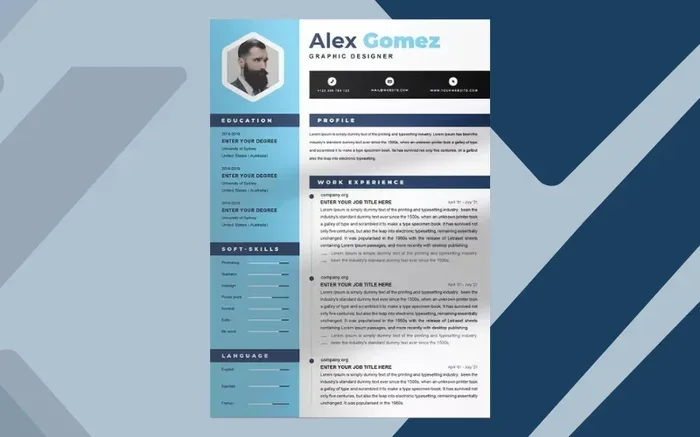
Placing your education section correctly on a resume can make or break your chances. Where should education go on a resume depends on your experience level and the job you want. This guide breaks down the best placement strategies, what to include, and common mistakes to avoid so you can build a resume that stands out.
You spent years studying. You earned your degree. Now you need to show it off on your resume. But here is the big question: where should education go on a resume?
The answer is not one-size-fits-all. It depends on your work history, your career level, and the job you are applying for. A new graduate has very different needs than a seasoned professional with ten years of experience. And that is exactly why this guide exists.
In this article, we will walk you through every scenario. You will learn the best resume placement for education, what details to include, and how to format it so it looks clean and professional. By the end, you will know exactly how to arrange your resume sections to make the best impression.
Key Takeaways
- New graduates should place education near the top: When you have little work experience, your degree matters most.
- Experienced professionals should put education below work history: Let your job achievements lead the way.
- Always include degree name, school, and graduation year: These are the core details every hiring manager looks for.
- Add relevant coursework, honors, or GPA only when they strengthen your application: Quality beats quantity.
- Tailor the placement based on the job description: Match your resume to what the employer values most.
- Avoid listing every degree you ever earned: Keep it relevant and concise.
- Use consistent formatting across all sections: A clean layout boosts readability and professionalism.
📑 Table of Contents
- Why the Education Section Matters on a Resume
- Where Should Education Go on a Resume
- What to Include in Your Education Section
- How to Format the Education Section for Maximum Impact
- Common Mistakes People Make with Education on Resumes
- When to Move Education Higher or Lower on the Resume
- Education Placement for Different Resume Types
- Expert Insights on Education Placement
- Key Takeaways
Why the Education Section Matters on a Resume
Many people overlook the education section on their resume. They focus only on work experience and forget that education carries real weight. Think about it. Your degree shows that you have discipline, knowledge, and the ability to commit to long-term goals.
For some roles, education is a hard requirement. Jobs in healthcare, engineering, teaching, and law often demand specific degrees. If you skip this section or place it poorly, you might get filtered out before a human even sees your application.
But education does more than just check a box. It tells a story. When you describe your academic background well, it shows the hiring manager who you are as a learner and a professional. A strong education section can fill gaps in work experience and show that you are growing constantly.
So yes, this section matters a lot. The question is not whether to include it. The question is where to place it for maximum impact.
Where Should Education Go on a Resume
The placement of your education section depends on one simple rule: lead with what is most relevant to the job. Let us break this down by experience level.
For Recent Graduates: Put Education at the Top
If you just finished school and have little or no work experience, your education should go near the top of your resume. Right below your contact information and summary, actually. This is your strongest asset right now.
Why? Because you do not have a long work history to lean on yet. Your degree, your GPA, and your academic achievements are what set you apart. When a hiring manager scans your resume, they need to see your qualifications upfront.
Think of it this way. Just like a bright sun leads the sky, your education should lead your resume when you are early in your career. It gives the reader immediate context for who you are and what you bring to the table.
For Mid-Career Professionals: Place Education Below Work Experience
If you have three to five years of solid work experience, flip the order. Put your work history first and your education section second. Your job achievements now tell a stronger story than your degree.
The hiring manager cares more about what you have done in the real world. They want to see your career growth, your accomplishments, and your skills in action. Education still matters, but it plays a supporting role at this stage.
You should still list your degree clearly. Just move it down so your experience section gets the spotlight it deserves.
For Senior-Level and Executive Candidates: Keep Education Brief and Low
If you have over ten years of experience, your education section should be short and placed near the bottom. At this level, nobody cares much about where you went to school. They care about what you have done with your career.
List your highest degree and the institution name. Keep it to two lines maximum. Your extensive work history and leadership achievements speak for themselves.
Sometimes people say that experience is the best teacher of all. This is especially true for senior candidates. Let your track record do the heavy lifting.
What to Include in Your Education Section
Now that you know where to place it, let us talk about what to put inside the section. A common mistake is either including too much or too little. You need to find the sweet spot.
Essential Information to Always Include
Every education entry on your resume should have these core details:
- Degree or diploma name: For example, Bachelor of Science in Business Administration.
- Institution name: The full name of your college or university.
- Graduation date or expected date: Month and year. Use month-year format.
- Location: City and state of the school. This is optional but helpful.
These four pieces of information give the reader everything they need. Keep it clean and simple.
Optional Details That Can Add Value
Sometimes you have extra details that strengthen your application. These are not required, but they can help in certain situations:
- GPA: Include it only if it is 3.5 or higher. A strong GPA shows academic excellence.
- Relevant coursework: List a few courses that directly relate to the job you want.
- Honors and awards: Dean’s list, scholarships, or academic prizes add credibility.
- Thesis or capstone project: If it is highly relevant to the position, mention it briefly.
- Study abroad or exchange programs: These show adaptability and global awareness.
Be selective. Only include details that add value. A cluttered education section hurts more than it helps.
How to Handle Multiple Degrees
If you have more than one degree, list them in reverse chronological order. Put the most recent one first. You do not need to list every degree you ever earned. Focus on the ones that matter for the job.
For example, if you have a Master of Business Administration and a Bachelor of Arts in Communications, lead with the MBA. The higher and more recent degree gets top billing.
How to Format the Education Section for Maximum Impact
Formatting matters more than most people think. A messy education section can distract from your qualifications. A clean, well-organized section makes your resume easy to scan.
Use Consistent Formatting Throughout
Your education section should match the style of the rest of your resume. Use the same font, font size, and spacing. Consistency shows attention to detail, and hiring managers notice these things.
Here is a simple format that works well:
- Degree Name — Institution Name, Location
- Graduation Month, Year
- GPA (optional): X.XX
This keeps everything aligned and easy to read. Use bold text for the degree name and institution. Keep the graduation date in regular weight.
Keep It Concise
Your education section should not take up half the page. For most people, it should be three to five lines per entry. Two entries maximum for most candidates.
Remember, this is a resume, not a transcript. The reader wants the highlights, not every class you ever took.
Match the Format to the Resume Style
Different resume styles call for different approaches. A chronological resume puts education after work history. A functional resume might emphasize skills and education more heavily. A combination resume balances both.
Choose the format that best suits your background and the job you are targeting. The education placement should always follow the overall structure of your resume.
Common Mistakes People Make with Education on Resumes
Even smart job seekers make mistakes with their education section. Here are the most common ones and how to avoid them.
Listing Irrelevant Degrees
That associate degree from ten years ago in a completely unrelated field? Unless it is specifically required for the job, leave it off. Every line on your resume should earn its place.
Focus on what is relevant. A clean, focused resume always outperforms a cluttered one.
Including Outdated Information
If you graduated over fifteen years ago and your GPA was average, there is no need to include it. The hiring manager cares about your recent and relevant qualifications much more.
As a general rule, drop your GPA from your resume once you have more than five years of professional experience.
Using Vague Descriptions
Do not just write “College Degree.” That tells the reader nothing. Always include the full degree name, the institution, and the graduation year.
Be specific. Specificity builds trust and credibility.
Forgetting to Update the Section
If you earn a new degree, complete a certification, or take relevant coursework, update your resume right away. An outdated education section signals that you are not paying attention to details.
Treat your resume as a living document. Update it regularly, even when you are not actively job searching.
When to Move Education Higher or Lower on the Resume
Sometimes the standard rules do not apply. Here are a few situations where you might adjust the placement of your education section.
When the Job Posting Emphasizes Education
Read the job description carefully. If the employer lists specific educational requirements upfront, move your education section higher. This shows them immediately that you meet their criteria.
Some job postings use language like “Required: Bachelor’s degree in a related field.” When you see this, your education section should be one of the first things they see.
When You Are Changing Careers
Switching industries can be tricky. If your degree is more relevant to your new career than your work history, consider placing education higher. Your academic background can bridge the gap between careers.
Education can be a powerful career changer tool. Use it strategically to show that you have the foundation needed for the new role.
When You Have a Strong Academic Story to Tell
Did you graduate at the top of your class? Did you earn a prestigious scholarship? Did you complete a challenging honors program? If so, give your education section more prominence.
These achievements tell a compelling story about your work ethic and intellectual ability. Let them shine.
Education Placement for Different Resume Types
Not all resumes are the same. Here is a quick comparison of how education placement shifts across different formats.
| Resume Type | Best Education Placement | Why |
|---|---|---|
| Chronological | Below work experience | Focuses on career timeline and job history |
| Functional | Near the top or integrated with skills | Emphasizes skills and qualifications over job history |
| Combination | After the skills summary, before work history | Balances skills and experience equally |
| Entry-Level | Near the top, right after the summary | Education is the strongest qualification for new grads |
Choose the approach that fits your situation. There is no single correct answer. The best placement is the one that makes your strongest case for the specific job.
Expert Insights on Education Placement
We spoke with several hiring managers and career coaches about how they view the education section on resumes. Here is what they had to say.
“I spend about six seconds on the initial scan of a resume,” says Sarah, a senior recruiter in the tech industry. “If education is placed clearly and early for entry-level candidates, it helps me decide if I want to keep reading. But for senior roles, I skip straight to experience.”
Another career coach, Mark, adds this insight: “Your education section should support your story. It should not compete with it. Think of it as a supporting actor, not the lead.”
These perspectives reinforce the core principle: placement depends on context. Know your audience. Know the job. Adjust accordingly.
Key Takeaways
- Recent graduates should place education near the top of the resume: It is your strongest qualification when you lack extensive work history.
- Experienced professionals should put education below work experience: Let your achievements lead the way.
- Always include degree name, institution, and graduation year: These are the non-negotiable essentials.
- Add GPA, honors, and relevant coursework only when they strengthen your case: Be selective and strategic.
- Match education placement to the job description and resume format: There is no single best answer for every situation.
- Avoid common mistakes like listing irrelevant degrees or using vague descriptions: Keep your resume clean and focused.
- Treat your resume as a living document: Update your education section whenever something changes.
Getting the education placement right on your resume is a small change that can make a big difference. It is one of those details that seems minor but actually shapes the hiring manager’s first impression.
Now that you know where should education go on a resume, you have the power to arrange your qualifications in the most effective way. Whether you are a fresh graduate stepping into the workforce or a seasoned professional making a move, the right placement helps your resume tell the right story.
Take action today. Review your resume. Check your education section. Make sure it is placed where it can do the most good. A small tweak now could lead to a big opportunity tomorrow.
Your education shaped who you are. Make sure your resume shows it in the best possible light. You have worked hard for your degree. Let your resume reflect that effort with a clear, strategic, and polished presentation.
Frequently Asked Questions
Should I include my high school education on my resume?
Only if you are a recent high school graduate or if you have no post-secondary education. For most job seekers with a college degree or higher, high school education is not necessary and can make your resume look dated.
Is it okay to leave off the graduation year?
Yes, you can leave off the graduation year if you are concerned about age discrimination. However, for most resumes, including the year helps the hiring manager understand your timeline and qualifications quickly.
Where should I put certifications if I already have an education section?
If your certifications are closely related to your field, you can include them within the education section. Otherwise, create a separate “Certifications” section below education. This keeps things organized and easy to scan.
Should education always come before work experience?
No. Only new graduates or those with very little work experience should place education first. Experienced professionals should always lead with their work history, as it carries more weight at senior levels.
Can I include online courses or bootcamps in the education section?
Yes, especially if they are relevant to the job. You can list them under a separate subheading like “Additional Training” or include them in the education section if they are closely related to your degree or career goals.
How many lines should my education section take up on the resume?
For most candidates, the education section should take up no more than three to five lines per entry. Keep it tight and focused. Hiring managers scan resumes quickly, and a concise section is easier to read.


