
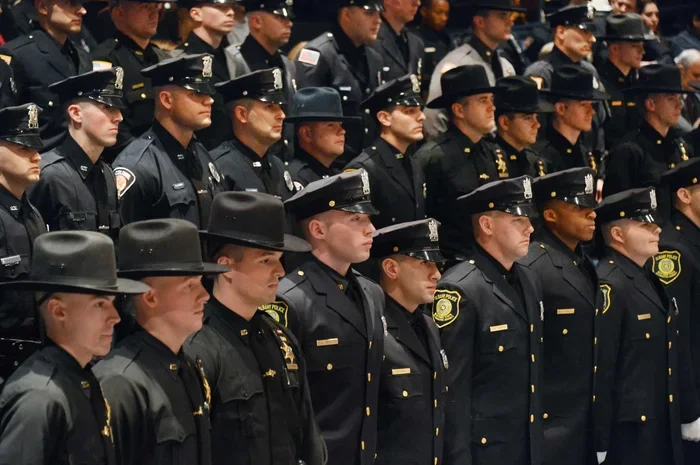
Becoming a police officer requires at least a high school diploma or GED, but many departments now prefer or require college-level coursework. Your education path can range from minimal schooling to a full bachelor’s degree in criminal justice. The right education not only gets you hired but also accelerates your career growth and pay grade.
Key Takeaways
- Minimum Requirement: Most departments require a high school diploma or GED as the baseline education to become a police officer.
- College Degrees Help: An associate’s or bachelor’s degree in criminal justice, law enforcement, or a related field makes you a stronger candidate and opens doors for advancement.
- Police Academy Is Mandatory: Regardless of your education level, you must complete a police academy training program before becoming a sworn officer.
- Education Impacts Pay and Rank: Officers with higher education often earn more and qualify for specialized or supervisory positions faster.
- Continuing Education Matters: Many departments offer tuition assistance and encourage officers to pursue ongoing learning throughout their careers.
- Physical and Mental Fitness Count Too: Education is just one piece of the puzzle. Passing medical, psychological, and fitness tests is equally important.
- State and Federal Agencies Have Higher Standards: Agencies like the FBI or state police typically require a college degree for entry-level positions.
📑 Table of Contents
- Understanding the Education Requirements to Become a Police Officer
- Minimum Education: High School Diploma or GED
- College Degrees That Boost Your Police Career
- Police Academy Training: The Hands-On Education
- How Education Impacts Your Police Career
- Continuing Education for Police Officers
- Common Mistakes to Avoid When Planning Your Education
- Expert Insights on Education and Law Enforcement
- Final Thoughts on Education to Become a Police Officer
Understanding the Education Requirements to Become a Police Officer
So, you are thinking about becoming a police officer. That is a great goal. But one of the first questions you need to answer is about your education. What education do you need to be a police officer? The short answer is: it depends on the department and the level of agency you want to join.
Some local police departments will accept a high school diploma. Others want at least a few college credits. And federal agencies? They often require a full bachelor’s degree. This guide breaks down every level of education you might need. We will cover everything from basic diploma requirements to advanced degrees that can supercharge your career. Let us dive in.
Minimum Education: High School Diploma or GED
The most basic requirement to become a police officer is a high school diploma or a GED equivalent. This is the starting point for most entry-level law enforcement jobs. Many city and county police departments set this as their floor. If you do not have a diploma, earning your GED should be your first step.
Here is what you need to know about the minimum education path:
- Age Requirement: Most departments require you to be at least 21 years old. Some allow candidates as young as 18.
- Citizenship: You must be a U.S. citizen or permanent resident in most cases.
- Clean Background: A criminal record will almost always disqualify you. Departments run thorough background checks.
- Physical Fitness: You must pass a physical ability test. This includes running, strength tests, and agility drills.
- Vision and Hearing: Corrected vision and normal hearing are typically required.
Even if a department accepts only a diploma, having extra education always helps. Think of the diploma as your launchpad, not your ceiling. The more you learn, the better your chances.
Why a Diploma Alone May Not Be Enough
Here is the honest truth. The job market for police officers is competitive. Many departments receive hundreds of applications for a single opening. A diploma gets your foot in the door, but it may not be enough to stand out. Departments in urban areas and larger cities often prefer candidates with college experience. This is where additional education becomes your secret weapon.
Understanding the language of education can also help you navigate training materials and academic coursework. For instance, learning common idioms for education can make your classroom experience smoother and help you communicate better with instructors and peers.
College Degrees That Boost Your Police Career
If you want to stand out from other applicants, a college degree is your best move. Many departments give preference to candidates with post-secondary education. Some even offer higher starting pay for those with degrees. Let us look at the most common degree paths for aspiring officers.
Criminal Justice Degree
An associate’s or bachelor’s degree in criminal justice is the most popular choice for future police officers. This degree covers topics like criminology, law enforcement procedures, constitutional law, and ethics. It gives you a solid foundation for understanding the justice system.
Here is what a typical criminal justice curriculum includes:
- Introduction to Criminology
- Policing in America
- Criminal Law and Procedure
- Ethics in Law Enforcement
- Corrections and Rehabilitation
- Criminal Investigation Techniques
An associate’s degree takes about two years. A bachelor’s degree takes four. Both are valuable. But if you want to move up quickly, the bachelor’s degree gives you a serious edge.
Other Relevant Degrees for Police Officers
Criminal justice is not your only option. Several other degrees can prepare you for a career in law enforcement. Here are some strong alternatives:
- Criminalistics or Forensic Science: Great for officers interested in crime scene investigation.
- Public Administration: Useful for those aiming at management or administrative roles.
- Psychology: Valuable for officers working in crisis intervention or behavioral analysis.
- Sociology: Helps you understand communities and social dynamics, which is key for community policing.
- Computer Science or Cybersecurity: In-demand for cybercrime units and digital forensics teams.
- Emergency Management: Prepares you for disaster response and coordination roles.
When choosing a degree, think about your long-term goals. Where do you see yourself in ten years? The right degree aligns with your career vision.
Just as education has its own creative expressions, the field of law enforcement uses its own figures of speech. Exploring metaphors for education can give you insight into how learning and policing intersect in powerful ways.
Police Academy Training: The Hands-On Education
No matter what degree you earn, you must complete police academy training. This is a hands-on, intensive program that teaches you the practical skills of law enforcement. Think of it as the boot camp of policing. It combines classroom learning with physical training and real-world scenarios.
A typical police academy program lasts about 12 to 24 weeks. During this time, you will cover a wide range of topics:
- Law Enforcement Tactics: How to approach dangerous situations safely.
- Firearms Training: Proper handling, marksmanship, and use-of-force guidelines.
- Traffic Control and Investigation: Managing scenes and gathering evidence.
- First Aid and CPR: Emergency medical response skills.
- Report Writing: Clear, accurate documentation is critical in policing.
- State and Local Laws: Deep dives into the legal codes you will enforce.
- Defensive Tactics: Hand-to-hand combat and de-escalation techniques.
The academy is demanding. You will be pushed physically and mentally. But it is also where you build the core skills that define your career as an officer. Graduating from the academy is a non-negotiable step for anyone asking what education do you need to be a police officer.
Police Academy vs. College: How They Compare
Let us compare these two forms of education side by side. This table shows how police academy training and college education differ and complement each other.
| Aspect | Police Academy | College Degree |
|---|---|---|
| Duration | 12 to 24 weeks | 2 to 4 years |
| Focus | Practical, hands-on skills | Theoretical and academic knowledge |
| Cost | Usually paid by the department | Varies; can be expensive |
| Certification | Required for all officers | Optional but highly recommended |
| Career Impact | Gets you hired | Gets you hired faster and higher |
| Topics Covered | Tactics, firearms, laws, first aid | Criminology, law, ethics, management |
The best approach? Do both. Earn your degree first or alongside academy training. This combination makes you the most competitive candidate possible.
How Education Impacts Your Police Career
Education does not just help you get hired. It shapes your entire career trajectory. Officers with more education often advance faster, earn higher pay, and qualify for specialized roles. Let us break down the real-world impact of education on a police career.
Pay and Promotions
Many police departments use pay scales that reward education. An officer with a bachelor’s degree may start at a higher step on the pay scale than someone with only a diploma. Over a 20-to-30-year career, this difference adds up to tens of thousands of dollars.
For promotions, education matters even more. When a sergeant or lieutenant position opens, departments look at education alongside experience and exam scores. A candidate with a college degree often has the edge. Here are some typical education requirements for rank promotions:
- Sergeant: High school diploma preferred; college credits or degree strongly favored.
- Lieutenant: Bachelor’s degree often required or preferred.
- Captain and Above: Bachelor’s or master’s degree typically expected.
Specialized Units and Roles
Want to work in narcotics, cybercrime, or detective divisions? Higher education often unlocks these opportunities. Specialized units frequently require additional coursework or degrees. For example, a detective role might prefer or require a bachelor’s degree in criminal justice or a related field.
Similarly, federal agencies like the FBI, DEA, and Secret Service have strict education requirements. Most federal law enforcement positions require at least a bachelor’s degree. Some specialized roles may even prefer or require a master’s degree.
As you advance in your education journey, you will encounter many figurative expressions that are common in academic and professional settings. Learning similes for education can help you better understand training manuals, academic papers, and professional communications in the field.
Continuing Education for Police Officers
Your education does not stop after you get hired. Many departments encourage and even fund ongoing learning. Continuing education keeps your skills sharp and opens new doors throughout your career.
Here are some common ways officers continue their education after joining the force:
- Tuition Assistance Programs: Many departments pay for college courses. This can cover partial or full tuition.
- Advanced Certification Programs: Specialized certifications in areas like forensic accounting, cybercrime, or hostage negotiation.
- Master’s Degree Programs: Some officers pursue a master’s in criminal justice, public administration, or leadership.
- In-Service Training: Departments require annual training hours to maintain certification and stay current on laws and procedures.
- Workshops and Conferences: These events offer networking opportunities and exposure to new policing strategies.
Continuing education is one of the best investments you can make in your career. It keeps you competitive, engaged, and ready for whatever challenges come your way.
Common Mistakes to Avoid When Planning Your Education
Aspiring officers often make avoidable mistakes when planning their education path. Here are some pitfalls to watch out for:
- Waiting Too Long to Start: Every semester counts. Start your coursework as soon as possible, even if you are still in high school.
- Choosing the Wrong Degree: Not all degrees are equally useful for law enforcement. Pick a field that aligns with policing or criminal justice.
- Ignoring Physical Training: Education is important, but you cannot neglect fitness. Both matter equally.
- Skipping the Police Academy: A degree alone does not make you a police officer. You must complete academy training and earn your certification.
- Overlooking Department-Specific Requirements: Different departments have different standards. Always check the specific requirements for your target agency before committing to a degree program.
Avoiding these mistakes saves you time, money, and frustration. Plan ahead and stay focused on your goals.
Expert Insights on Education and Law Enforcement
We spoke with several law enforcement professionals about the role of education in their careers. Here is what they had to say:
Captain Maria Gonzalez, 18 years of service: “I started with just a diploma and worked my way up. But when I went back for my degree, everything changed. I got promoted faster, earned more, and felt more confident in my role. Education is not just a checkbox. It is a career accelerator.”
Detective James Liu, 12 years of service: “The things I learned in my criminal justice classes directly applied to my daily work. Understanding legal procedures, writing reports, and analyzing crime patterns all benefited from my college education. I wish I had started sooner.”
Sergeant Angela Thompson, 15 years of service: “Our department values education. Officers with degrees get first pick of specialized assignments. If you are serious about this career, invest in your learning now.”
These insights confirm what the data shows. Education is a powerful tool for anyone pursuing a career in law enforcement. The more you learn, the more options you have.
Final Thoughts on Education to Become a Police Officer
So, what education do you need to be a police officer? The truth is, there is no single answer. The minimum is a high school diploma or GED. But to truly thrive in this career, you should aim higher. An associate’s or bachelor’s degree in criminal justice or a related field sets you apart from other candidates. It boosts your starting pay, speeds up your promotions, and opens doors to specialized roles.
Combine your education with police academy training, and you become a well-rounded candidate ready for the challenges of law enforcement. And remember, learning does not stop at graduation. Continuing education throughout your career keeps you sharp, competitive, and prepared for whatever comes next.
Whether you are just starting out or looking to advance, your education is your greatest asset. Invest in it wisely. The badge awaits those who are prepared.
Frequently Asked Questions
What is the minimum education to become a police officer?
Most departments require at least a high school diploma or GED. However, many departments in larger cities and urban areas prefer candidates with some college coursework or an associate’s degree. Always check the specific requirements of the department you want to join.
Do I need a college degree to become a police officer?
No, a college degree is not always required for local police departments. But having one significantly improves your chances of getting hired, earning higher pay, and advancing faster in your career. Federal agencies like the FBI typically require a bachelor’s degree.
How long does police academy training last?
Police academy programs typically last between 12 and 24 weeks. The duration varies by state and department. During this time, you will receive intensive training in law enforcement tactics, firearms, first aid, report writing, and state laws.
Can I work as a police officer while earning my degree?
Yes, many departments offer tuition assistance programs that allow you to pursue a degree while working. Some officers complete their degrees part-time over several years. This is a great way to earn while you learn and advance your career simultaneously.
What degree is best for a police officer career?
A degree in criminal justice is the most direct path. However, degrees in public administration, psychology, forensic science, or cybersecurity can also be valuable, especially if you are interested in specialized units or federal agencies.
Does education really make a difference in a police career?
Absolutely. Education impacts your starting pay, promotion speed, eligibility for specialized roles, and even your ability to qualify for federal law enforcement positions. Officers with degrees consistently report better career outcomes and greater job satisfaction.
=== CONCLUSION ===
The journey to becoming a police officer starts with education. Whether you aim for a high school diploma or a full bachelor’s degree, every step you take in learning brings you closer to your goal. The education requirements for police officers vary by department, agency, and rank. But one thing is clear: the more you invest in your education, the more opportunities open up for you in law enforcement.
Start with the basics. Add a degree if you can. Complete your police academy training. And never stop learning. Your future as a police officer depends on the education choices you make today. Take that first step now and build the career you have always wanted.


